
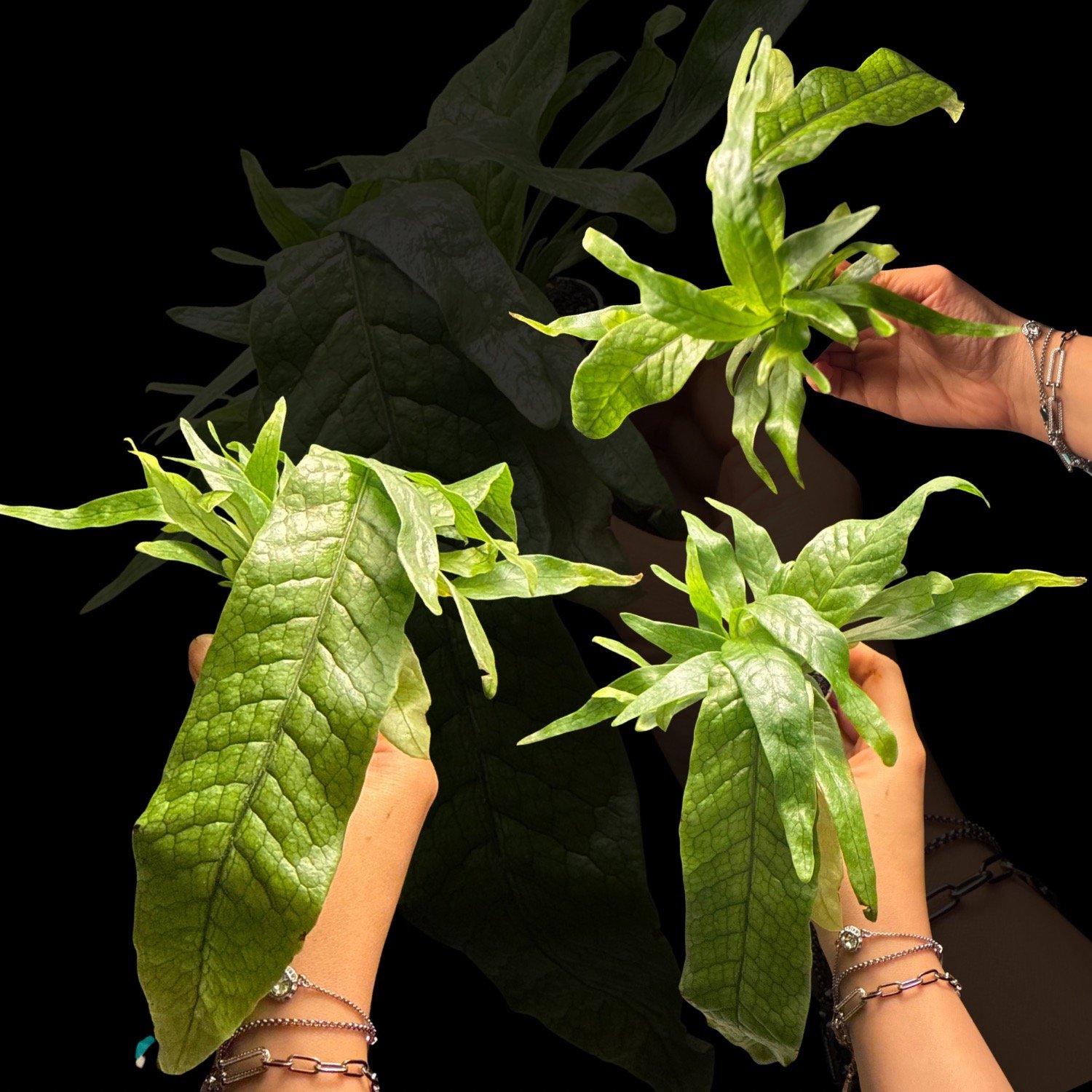
🌍 Botanical Description & Natural Habitat
A tropical evergreen fern from the Polypodiaceae family distinguished by broad, leathery fronds with a pronounced reticulated venation pattern resembling crocodile skin. It grows from a creeping surface rhizome that produces arching fronds, forming a medium-height structural clump with strong visual presence.
Native to the humid rainforests of Southeast Asia, it occurs as a terrestrial to semi-epiphytic species in filtered light, high humidity, and airy organic substrates.
🌫 Role in Terrariums & Bioactive Systems
An ideal structural plant for semi-closed humid terrariums where moderate airflow is present. Functions as a midground to background species, adding bold three-dimensional leaf texture without excessive vertical growth.
Contributes to:
• Surface moisture stabilization
• Microhabitat formation around the rhizome zone
• Substrate balance and improved visual layering
• Local microclimate regulation in humid systems
Biologically compatible with:
Springtails – Isopods
Rhizome must remain above the substrate to prevent rot.
🦎 Vivarium Application
Suitable for medium-sized tropical vivariums where it tolerates regular misting and provides broad low canopy cover and shaded retreats. Non-toxic and supportive of localized humidity elevation, making it appropriate for tropical frogs and juvenile geckos in bioactive enclosures.
🌱 Bioactive Planting Requirements
Plant in a light organic mix composed of coco peat, leaf litter, and fine bark over a drainage layer. The rhizome should be secured at the surface and left partially exposed for proper aeration. Requires high humidity, medium indirect light, and gentle airflow. Regular misting is preferred over heavy watering. No strong fertilization is required in established bioactive systems; remove senescent fronds at the base to maintain structural density.
🌿 Functional Value in Ecological Design
A rhizomatous structural fern that enhances textural diversity, supports microbial activity, stabilizes localized humidity, and reinforces long-term microclimate balance in humid terrarium ecosystems while providing a distinctive architectural foliage pattern.